

Restoring the Headwaters of Ohio’s Most Biodiverse River, the Big Darby Creek
The Big and Little Darby Creeks meander over 80 miles through rolling hills of corn fields and sparsely populated towns east of Columbus, Ohio. The creeks were federally designated as a National Scenic River in 1994 and harbor some of the Midwest’s most impressive aquatic and riparian biodiversity.
According to the Ohio Department of Natural Resources (ODNR), this includes 100 species of fish, five of which are state endangered, and 45 mollusks, eight of which are federally listed. These impressive natural resources have attracted not only local and federal protection but also the interest of conservation organizations.
Yet, in the past several years, urbanization within the watershed and declining mussel populations are thought to be slowly degrading the Darby’s water quality. However, newly funded projects are beginning to restore the Big Darby’s headwaters at this crucial time.
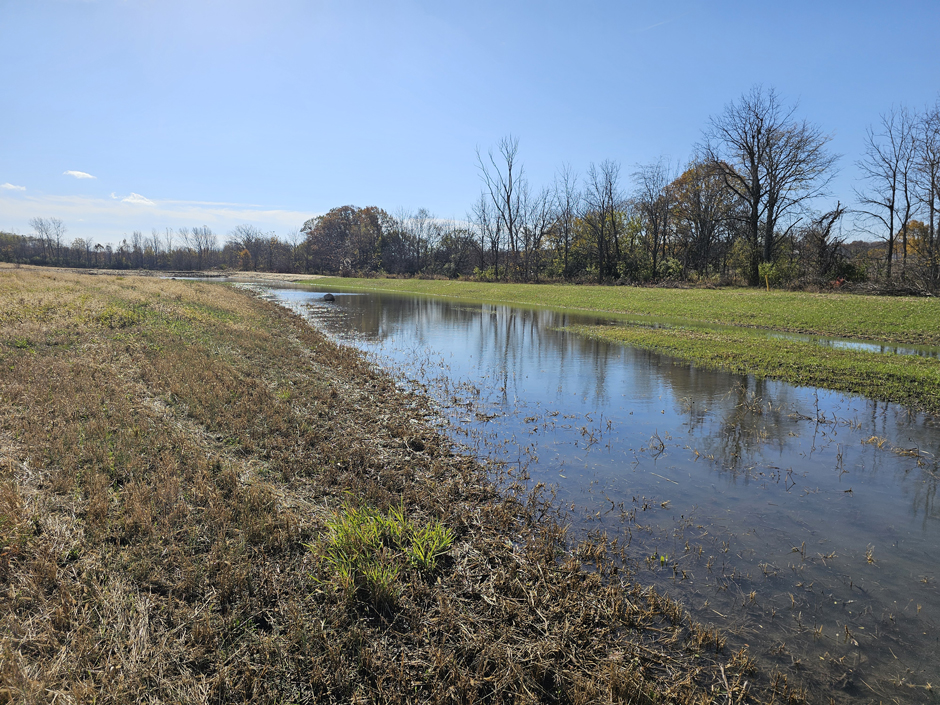
A restored wetland approximately two months after construction in October 2025. Tree and shrub planting to follow in spring 2026. (Credit: Provided by The Nature Conservancy Ohio)
The Nature Conservancy’s Work Around the Big Darby
Around the time it was designated a scenic river, The Nature Conservancy (TNC) purchased over one thousand acres around the Big Darby’s headwaters near Marysville, Ohio. According to Michelle Pressel, a TNC restoration ecologist, this was a significant decision from the famed conservation organization.
Pressel says that TNC rarely owns land, often preferring to partner with landowners on restoration projects. However, even decades ago, they recognized the value of the Big Darby.
“We knew it provided excellent water quality and biodiversity in the area,” Pressel says.
In 2008, TNC opened the Big Darby Creek Headwater Preserve, but hundreds of acres within the southern extent of the complex remained unrestored. Pressel says past farming degraded the wetland and riparian ecosystems within TNC’s land, and for years, they didn’t have the funds to restore all of it.
However, in the summer of 2023, TNC applied for and received a grant from the H2Ohio program to restore wetlands on its property. As the local restoration ecologist, Pressel could now fulfill the organization’s original plans for the preserve.
“The goal is to protect and restore the headwaters,” Pressel says, “and protecting [the Big Darby] is really important for The Nature Conservancy.”
TNC began work in January of 2024, and Pressel had an important task: to restore 217 acres of former agricultural fields into riparian ecosystems and wetlands within two years.
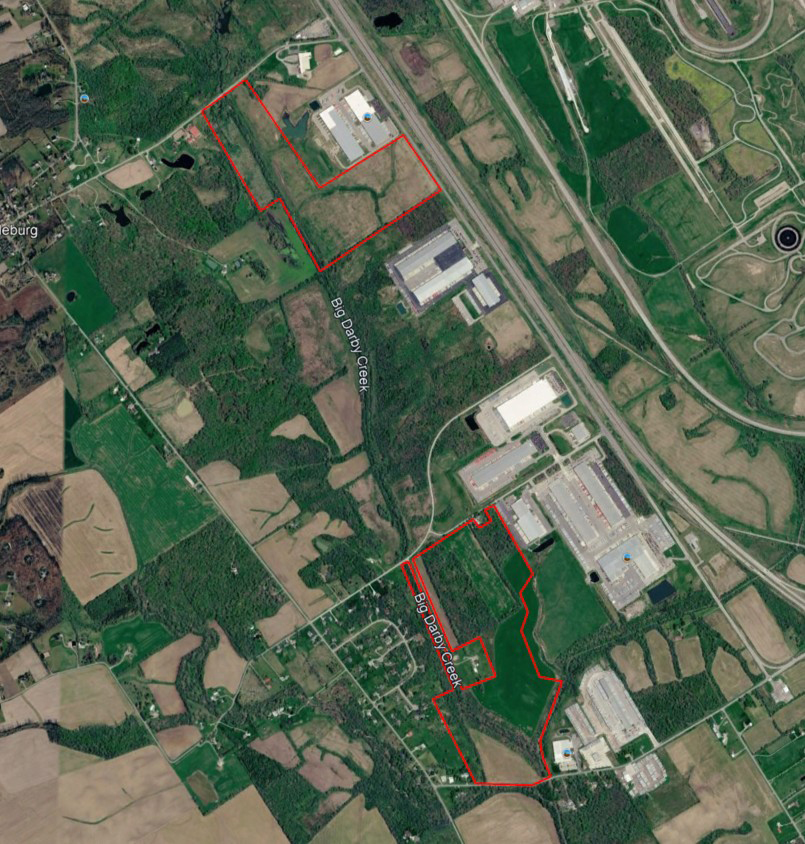
Pre-restoration aerial of the Big Darby Project areas outlined in red. (Credit: Provided by The Nature Conservancy Ohio)
Building Wetland, Prairie, and Riparian Ecosystems
The restoration, called the Big Darby Corridor Treatment Project, will finish in the spring of 2026. It will contain two parcels of land with 39 constructed wetlands scattered among fields of newly seeded upland and floodplain ecosystems.
Pressel says that restoring these wetlands was the most important aspect of the project, as agricultural development had drained all but a few on the property.
Through excavation targeting the agricultural drainage tiles and natural springs that supply the Big Darby Creek, a TNC contractor brought groundwater to the surface to create the wetlands. Surrounding these sites will be new native plantings, including various oaks, hickories, and large shrubs like wild plum.
Pressel says the vegetation was carefully chosen based on the ecosystems of the past. In fact, the specific woody species are based on a 1932 paper that documented species assemblages along the Big Darby.
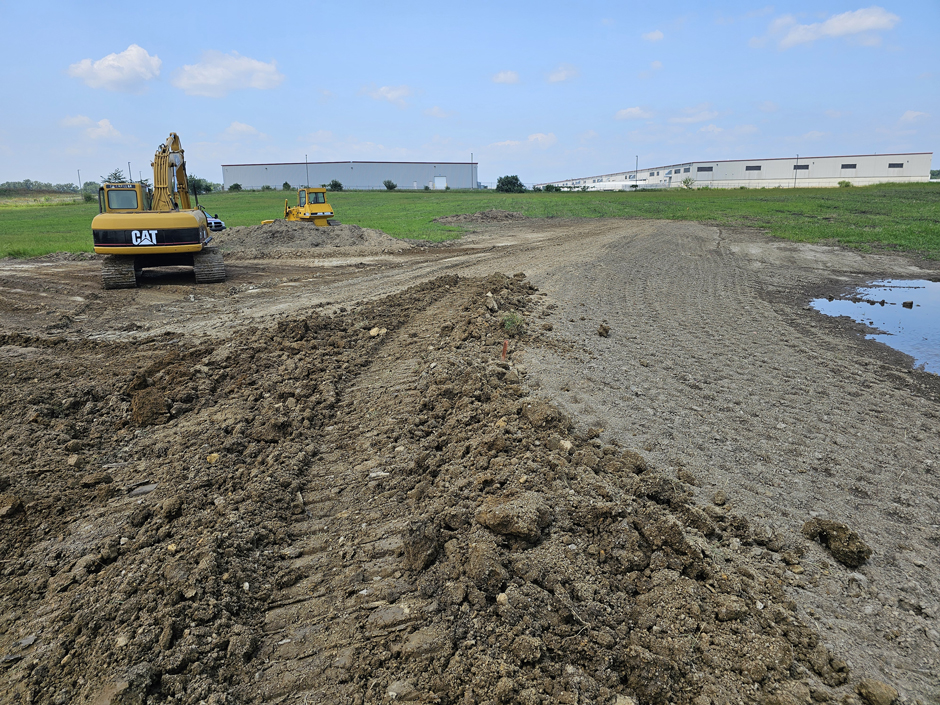
A wetland under construction in August 2025. (Credit: Provided by The Nature Conservancy Ohio)
They were further selected based on their preference for drier upland or wetter floodplain habitat, their resilience to a changing climate, and their wildlife habitat suitability.
“We design our restoration projects to be as resilient as possible,” she explains.
After nearly two years of excavation and hydrology work, the project will now focus on riparian habitat for the last several months. Pressel says that native trees will be planted along the creek to stabilize the banks and further filter the ground and surface water that will be draining into the Big Darby.
Ultimately, Pressel says the goal is to improve the water quality flowing into the creek. Enhancing the filtering capacity of the lands surrounding the Big Darby headwaters is key to achieving this goal. With the restoration phase nearly complete, TNC will be turning its attention to monitoring.
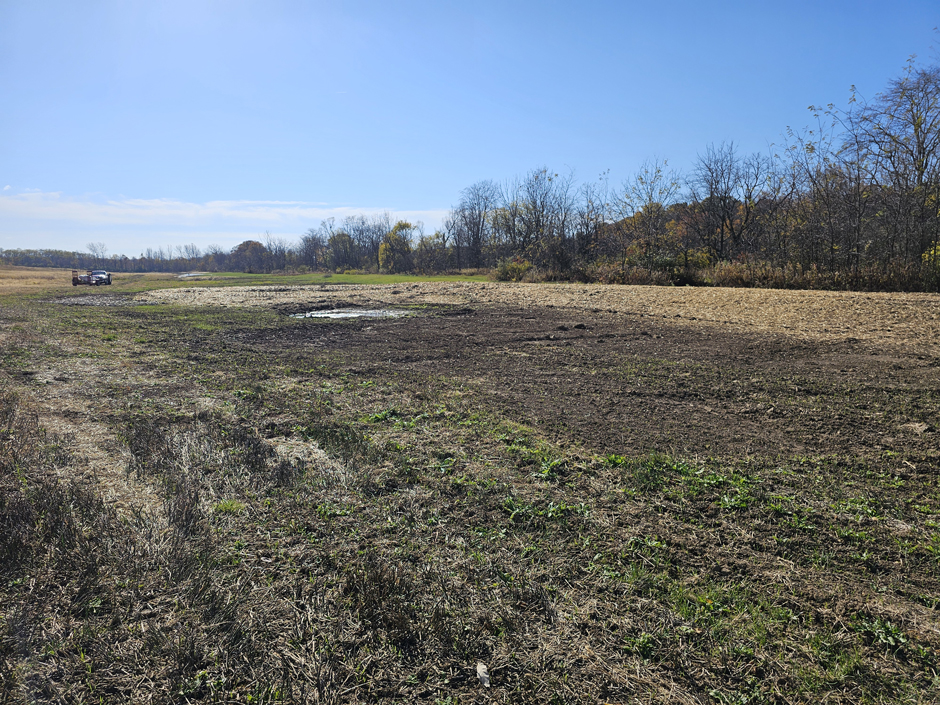
A restored wetland approximately one month after construction in October 2025. Tree and shrub planting to follow in spring 2026. (Credit: Provided by The Nature Conservancy Ohio)
Monitoring Vegetation and Water Quality Around the Big Darby Creek
For the next two years, Pressel says TNC will monitor native vegetation establishment, ensuring that the upland and riparian ecosystems remain intact. To aid this establishment, Pressel and the TNC’s contract partners will simultaneously remove invasive species on the properties.
“We want it to have the most successful start possible,” she explains.
Water quality monitoring in the Big Darby Creek is also a key aspect of post-restoration work, as nutrient reduction is one of the project’s primary goals.
While TNC’s H2Ohio grant doesn’t include funds for water quality monitoring, the ODNR has created a wetland monitoring program that will “assess nutrient removal of wetland restoration and enhancement projects” funded through H2Ohio.
Pressel says TNC will use monitoring data from the program’s annual reports to gauge the Big Darby project’s success and guide future management.
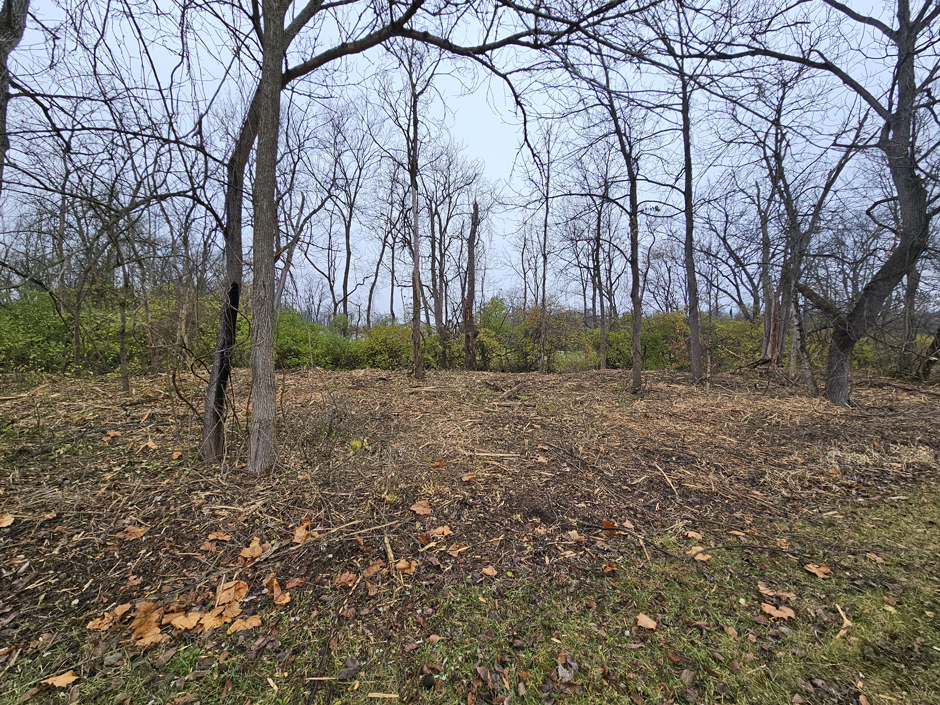
Riparian area along Big Darby Creek after invasive honeysuckle was cleared. Tree and shrub planting to follow in spring 2026. (Credit: Provided by The Nature Conservancy Ohio)
Future Monitoring and Restoration Projects
After two years of post-restoration vegetation monitoring and invasive plant removal, TNC will incorporate the Big Darby Corridor Treatment Project into the entire Big Darby Creek Headwater management schedule. Pressel says this will allow them to conduct baseline vegetation and water quality monitoring across the entire complex.
Although the Corridor Treatment Project will be completed, further restoration on TNC’s land isn’t out of the picture. According to the project website, TNC plans to restore a Big Darby tributary stream on the property.
Overall, Pressel is excited with how the restoration is progressing. Although no quantitative monitoring has been done, she’s already seen signs of improvement
“I’ve seen herons on my site, but I want to see more wildlife,” she says.
Pressel also observed beaver activity on the site, which is known to improve water quality with their dams. She believes it’s likely from a family that lives just upstream in the Headwater Preserve, suggesting improved habitat connection between the land parcels.
Ultimately, Pressel anticipates that this restoration will improve water quality throughout the Big Darby Creek. She says wetland and riparian restoration are reliable nutrient removal strategies, and TNC is confident in their effectiveness.
Being strategically located at the Big Darby’s headwaters, Pressel hopes that this restoration has cascading positive effects throughout one of the country’s most unique watersheds.
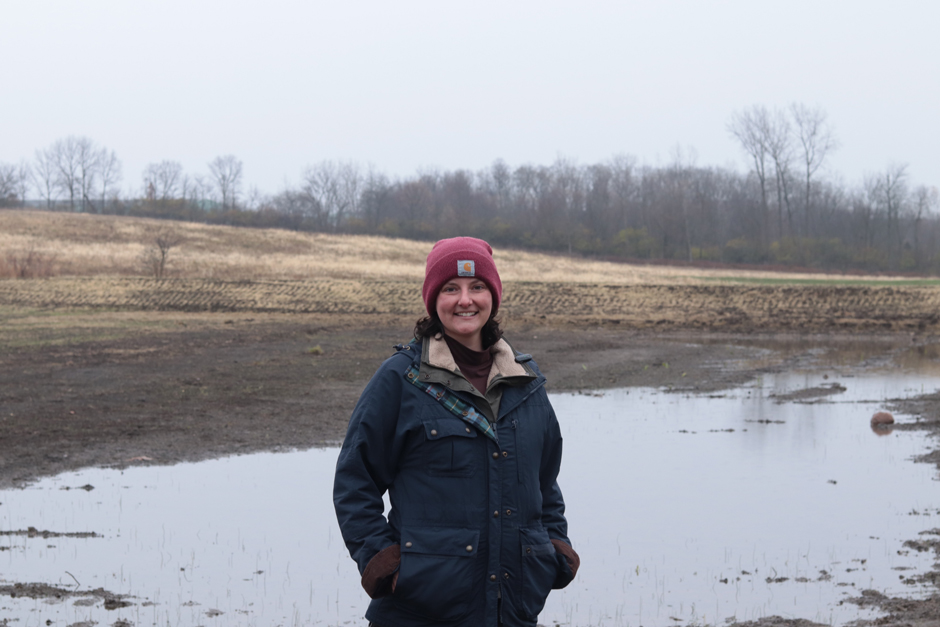
Michelle Pressel, Restoration Ecologist, standing in front of one of the 39 restored wetlands. (Credit: Provided by The Nature Conservancy Ohio)





0 comments